Public Records empower Sacramento residents to retrieve vital information without endless paperwork, and a well‑executed public records search can reveal property deeds, court case details, or marriage license data in minutes. By leveraging the county’s public records database and the free online portal, users can perform a public records lookup that respects public records access laws while protecting privacy where exemptions apply. Whether you need a public records request form for a background check, a citation for a news story, or data for genealogical research, the system offers searchable fields by name, address, record number, or date. The interface also supports API integration for developers seeking real‑time public records retrieval service, ensuring that journalists, researchers, and property investors receive accurate, up‑to‑date results. Understanding how to obtain public records quickly reduces reliance on costly third‑party services and keeps you compliant with public records disclosure guidelines.
Public Records are organized into clear categories—property, criminal history, court cases, and vital statistics—making it simple to choose the correct record type for any inquiry. The public records portal highlights free public records options while outlining any applicable fee schedule for copies or certifications, so users know exactly what costs to expect. For those conducting a public records search for background checks, the system flags records that fall under public records exemptions, ensuring compliance with both state and federal regulations. Researchers benefit from the public records digital archive, which preserves historical documents for genealogists and scholars, while the public records management software keeps the archive searchable and up‑to‑date. This blend of transparency, accessibility, and compliance turns a potentially daunting task into a straightforward, reliable experience.
How to Search Public Records
You can begin a public records search in Sacramento County by visiting the official court website and entering details into the online lookup tool. The portal shows results from property, court, and government databases, including warrant records, so you can complete a public records lookup without creating an account. For best results, gather basic facts like full names, addresses, and case identifiers. If the digital system does not show your target, in-person visits to the county clerk’s office offer additional options.
Official Search Portal: https://www.saccourt.ca.gov/online-services/case-search
Steps to Search
- Open the public records portal at the official website listed above.
- Select the record category such as civil, criminal, probate, or property records.
- Enter search details like last name, first name, business name, or case number.
- Add date ranges or location filters when available to narrow results.
- Review the search results list and open the matching record for full details.
- Download, print, or request certified copies based on your needs.
Search by Name
Searching by name is the most common method used in any public records request. The system asks for a last name first, then an optional first name to narrow results. You should type in the exact legal name shown on official documents like deeds, marriage licenses, or court filings. Common names often return a long list of results, so adding a middle name or birth year helps you locate the correct entry quickly.
Search by Address
Address-based searches work well for property, land, and tax records. You can enter a street number, street name, and ZIP code to find the parcel tied to that location. This method works even when you do not know the owner’s name, which helps real estate buyers, neighbors, and reporters. Property records often show the full chain of ownership, lot size, assessed value, and recorded transfers over time.
Search by Record Number
Record number searches give the fastest results because each document has a unique identifier. Examples include case numbers, document numbers, instrument numbers, or book and page references. You can find these numbers on prior paperwork, legal notices, or older search results. Once entered, the system jumps directly to the file, skipping the broad filter process used for name or address queries.
Search by Date
Date searches help when you know roughly when an event took place. Court case filings, property transfers, marriage licenses, and arrest recordings each carry a filing date in the public records database. You can set a date range or pick a single day from the calendar tool. This method pairs well with other filters, especially for events tied to a specific year or season.
Choosing the Correct Record Category
Picking the right category saves time and reduces errors during your public records lookup. Sacramento County organizes files into groups like civil cases, criminal cases, family law, probate, real estate, and vital statistics. Choosing the wrong group leads to zero results, even when the record exists. Always check the record type based on the event you are researching before entering search terms.
Sacramento County Public Record Categories
Sacramento County maintains many record types under one central public records database. Each category has its own office, fee schedule, and access rules based on public records access laws. Knowing these categories helps you pick the correct agency before filing a public records request form. The list below shows the most searched groups across the county system.
Property and Land Records
Property and land records cover deeds, titles, mortgages, liens, easements, and parcel maps. The Sacramento County Recorder’s office stores these documents and indexes them by name, address, and instrument number. You can view transfers, ownership history, and tax information through the recorder’s portal. Real estate investors, title officers, and homeowners use these files to confirm ownership and check for liens.
Court and Case Records
Court and case records show filings from civil, criminal, family, probate, and small claims courts. Each case shows the parties involved, hearing dates, motions, rulings, and final judgments. The Superior Court of California, County of Sacramento handles these files at 720 9th Street. Search tools let you look up active and closed cases using a case number, party name, or hearing date.
Criminal and Law Enforcement Records
Criminal and law enforcement records cover arrests, charges, dispositions, booking logs, and jail rosters. Local police agencies and the Sheriff’s office maintain these files under state and local rules. Some arrest details appear online, while full reports require a written request or in-person visit. Background checks often use these files along with court case outcomes.
Vital Records
Vital records include birth, death, and fetal death certificates filed with Sacramento County. The county registrar holds these files, while certified copies come from the California Department of Public Health. Birth and death records help with genealogy, identity proof, and insurance matters. Each request needs the full name, date of event, and parent names for birth certificates.
Marriage and Divorce Records
Marriage licenses and divorce decrees fall under family law records. The county clerk issues marriage licenses and records the ceremony details, while the Superior Court handles divorce filings. You can search marriage records by year and name range, then order certified copies for legal use. Divorce records show case numbers, settlement terms, and final orders.
Probate and Estate Records
Probate records cover wills, estate filings, guardianship cases, and conservatorship actions. The Superior Court probate department maintains these files from initial filing to final distribution. Researchers and heirs use probate records to verify estate claims and asset transfers. Each case shows the executor, heirs, asset list, and court instructions.
Business Records
Business records include fictitious business name filings, partnership agreements, and Uniform Commercial Code liens. The Sacramento County Clerk processes these documents and posts them on the public records portal. You can search by business name, owner name, or filing number. These records help confirm legal operation, check liens, and verify ownership.
Government and Administrative Records
Government and administrative records cover city council meeting minutes, budget reports, contracts, permits, and ordinances. Each agency posts these files under the California Public Records Act and the state’s open meeting laws. Reporters, researchers, and residents use these files to track decisions and spending. Requests go directly to the agency holding the record, not the court system.
How Public Records Are Created
Public records move through five stages before they reach the public records digital archive. Knowing how records are created helps you understand what you see in search results. Each step follows rules designed to keep information accurate, consistent, and legally valid. The list below explains the full lifecycle from creation to update.
Government Record Creation
Government record creation starts when a public agency collects data through a legal process. Examples include a court filing, a property sale, a birth registration, or a permit application. Each event generates an official document that carries legal weight. The original creator certifies the information with a signature, seal, or electronic stamp before submission.
Filing and Recording
Filing and recording happens when the agency accepts the document and assigns it a file or instrument number. The recorder’s office stamps, scans, and stores the document in a physical or digital archive. Official recording creates a public notice that protects property rights and legal claims. Errors at this stage can cause title issues, so staff verify data carefully.
Record Indexing
Record indexing adds searchable fields like names, dates, parcel numbers, and document types to each entry. This step makes the public records database usable for online lookups. Indexers pull data from the recorded document and store it in structured fields. Quality control checks help reduce typos that lead to search misses later.
Record Maintenance
Record maintenance covers storage, backup, and digital preservation over time. Sacramento County uses public records management software to keep files secure and organized. Backups protect against loss, while audit trails track changes. Maintenance also includes retention schedules that decide how long each record type stays available.
Record Updates
Record updates happen when a court order, correction request, or new filing changes the original entry. Updated records replace or amend the older version, and the system logs the change. Some records like liens get released, while others like judgments get renewed. Updates appear in search results once the change clears the review process.
Public Record Access
Sacramento County offers three main access paths for public records online and offline. Each method works for different needs, from quick lookups to legal certified copies. Public records access laws set the rules for what you can see and how you can request it. The table below shows the access methods and when to use each one.
Online Record Access
Online record access gives you the fastest way to perform a public records lookup. The portal runs 24 hours a day and shows results from indexed records. You can search by name, address, case number, or date without an account. Some records only show summary data, while full documents may need a separate copy request.
In-Person Access
In-person access works best when you need original documents, older files, or records not yet digitized. The county clerk and recorder offices have public terminals for self-service searches. Staff can help you locate files, pull microfilm, or explain restrictions. Bring a photo ID and the details you have to speed up the search.
Written Records Requests
Written records requests let you ask for records from agencies that do not post everything online. The California Public Records Act sets the rules for these requests, including response timelines. You send the request by mail, email, or delivery to the agency’s records office. Each request should describe the record clearly so staff can locate it quickly.
Copy Requests
Copy requests cover regular photocopies, printouts, or digital downloads. You can request copies during a search or after locating the record online. Most agencies charge a per-page fee based on the public records fee schedule. Digital copies often cost less than paper copies because there is no printing step.
Certified and Uncertified Copies
Certified copies carry an official stamp or seal that proves the document is a true copy of the original. Courts, government agencies, and many private companies require certified copies for legal matters. Uncertified copies work for research, personal review, or citations. Always check whether your need requires certified copies before paying the higher fee.
Public Record Costs and Processing
Costs and processing times vary by record type, agency, and request method. Sacramento County follows a standard public records fee schedule for copies and certifications. Most requests process within 10 business days, but complex searches take longer. The table below shows common fees for the most requested record types.
Search Fees
Search fees cover the time staff spend locating records based on your request. Many agencies waive search fees for brief lookups under 30 minutes. Longer searches may add an hourly fee per staff time. Online searches through the public records portal often avoid search fees because you run the lookup yourself.
Copy Fees
Copy fees depend on the format and size of the document. Black-and-white copies cost less than color copies, and digital files cost less than paper. Certified copies add a higher fee because they include an official seal. Check the fee schedule before submitting a request to avoid surprises.
Certification Fees
Certification fees pay for the seal, signature, and verification process. Each certified copy carries a separate fee because staff must check the original. Courts and vital records offices use strict rules for certification. Agencies will not certify documents that lack an original on file.
Request Processing Times
Processing times depend on record age, request volume, and document availability. Simple online searches return results instantly, while mail requests take days or weeks. Public records disclosure guidelines require agencies to respond within 10 business days for most written requests. Complex requests may take up to 30 days with a written update.
Payment Requirements
Payment requirements include cash, check, money order, and sometimes credit cards. In-person offices accept cards at the counter, while mail requests often require checks. The Sacramento County Recorder and Clerk offices post accepted payment methods on their websites. Always include a contact number and reference ID with mailed payments.
Public Record Availability and Restrictions
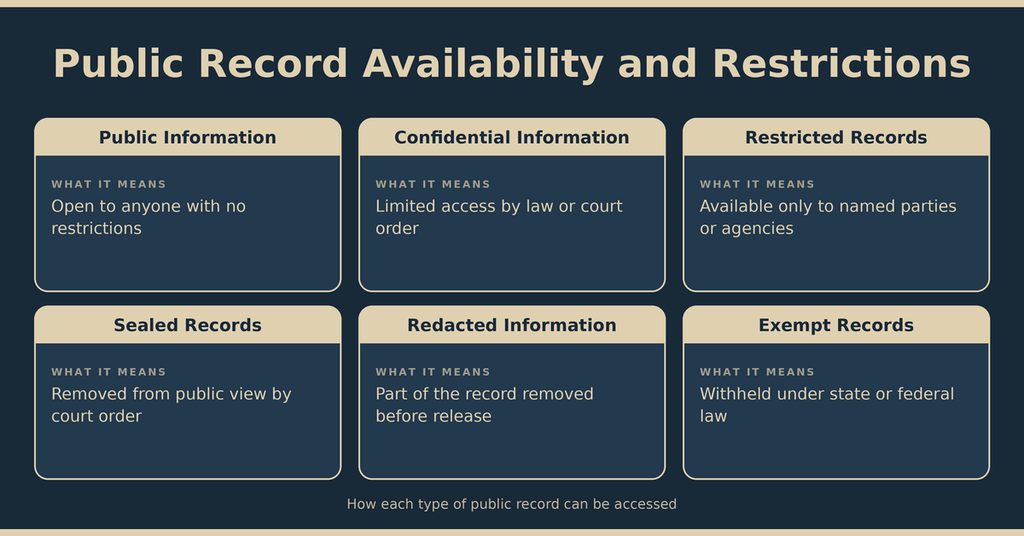
Not every record in Sacramento County is open to view, even though most are public. Public records exemptions protect sensitive data like Social Security numbers, medical files, and juvenile records. Knowing what stays restricted helps you avoid wasted search time. The list below explains the main restriction types used across county agencies.
Public Information
Public information includes property transfers, court filings, business registrations, and most government records. You can view these records without special permission. Search portals show summaries and full documents based on the record type. Reporters, genealogists, and researchers rely on public records for daily work.
Confidential Information
Confidential information covers data that the government collects but does not release. Examples include tax returns, medical records, including incident reports, and personnel files. Even public agencies must protect confidential data from public view. Disclosure requires a court order, consent, or legal authority under public records and privacy laws.
Restricted Records
Restricted records include adoption files, juvenile cases, and certain mental health records. Access often requires proof of relationship or legal standing. The court or agency decides who qualifies for access under state law. Restricted records may still appear in search results but show limited or redacted content.
Sealed Records
Sealed records are hidden from public view by a judge’s order. Common reasons include expunged convictions, dismissed cases, or sensitive family matters. Once sealed, the record does not appear in standard searches. You would need a separate court order to unseal the file.
Redacted Information
Redacted information is removed before the record reaches the public. Common redactions include Social Security numbers, account details, and minor children’s names. Agencies use redaction software to hide sensitive fields while keeping the rest visible. Public records compliance staff review documents before release.
Records Exempt From Disclosure
Records exempt from disclosure include law enforcement investigation files, child welfare reports, and certain government contracts. These exemptions come from state and federal laws that protect privacy and security. Agencies post a list of exemptions on their public records pages. You can still ask for access, but the agency will deny release when law protects the file.
Historical Sacramento County Public Records
Historical Sacramento County public records date back to the 1800s when the county formed. The archives hold deeds, court files, naturalization records, and early vital statistics. Many older files live in paper or microfilm form, though digitization grows each year. Researchers and genealogists use these archives for family history and local history work.
Archived Records
Archived records sit in storage facilities managed by the county or the state. These files include property transfers, probate cases, and early court rulings. Access often requires scheduling a visit with the archives staff. Some files have been scanned and added to the public records digital archive for online viewing.
Older County Records
Older county records cover files created decades ago, sometimes over 100 years old. Many of these files need careful handling because of fragile paper, faded ink, or old formats. The county keeps them in climate-controlled rooms to prevent loss. Researchers often need to request access through the county archivist.
Digitized Records
Digitized records are scanned versions of older documents added to the public records online system. Each image links to index data for fast searching. Users can view or download these records from home. Digitization helps protect original documents from damage while making history more open to the public.
Undigitized Records
Undigitized records still exist only in paper or microfilm form. These files often cover events before the digital system began or items too costly to scan. Access requires a visit to the office or a paid research request. Staff can pull, copy, and certify older files on request.
Historical Records for Genealogy
Historical records for genealogy include birth, marriage, death, and probate files from the late 1800s onward. Genealogists often pair these records with census data and cemetery lists. Sacramento County partners with libraries and genealogy groups to expand access. Researchers can order copies through the public records request form.
Public Record Accuracy and Updates
Public records rely on accurate data entry and timely updates to stay useful. Errors can come from typos, outdated forms, or delayed filings. Sacramento County works to correct mistakes through a formal review process. You can ask for a correction if you spot an error in any official record.
Record Accuracy
Record accuracy depends on the source of the original document. Court filings, recorded deeds, and vital statistics must meet strict standards. Even with rules, mistakes still happen during data entry or document scanning. Reviewing each record before relying on it for legal or financial matters is smart practice.
Outdated Information
Outdated information appears when an old record has not been updated. A property may still show a prior owner’s name because the new deed has not been recorded. Court cases may show old rulings before a final order posts. Always check the record date before trusting the details.
Data Entry Errors
Data entry errors happen when staff type names, dates, or numbers incorrectly. The public records database uses indexing rules that catch many errors, but some still slip through. Errors can affect searches because misspelled names may hide the right record. You can report suspected errors to the agency that maintains the file.
Updated Records
Updated records show the latest version of a file after a correction, appeal, or new filing. The system marks older entries as superseded but keeps them for history. Search results show the updated version first. You can view past versions by request through the records office.
Correcting Record Information
Correcting record information requires a formal request with proof of the error. You might need a sworn statement, supporting documents, or a court order. Vital records corrections go through the state registrar, while property and court records go through the county. Most agencies post correction forms on their websites for easy access.
Finding the Correct Public Record
Finding the correct public record takes planning and a clear idea of what you need. Many search failures come from missing details or wrong agency choices. Taking time to confirm names, dates, and locations saves you from wasted effort. The steps below help you zero in on the right file quickly.
Identifying the Responsible Agency
Identifying the responsible agency starts with the record type. Property records go to the Recorder, court records to the Superior Court, and vital records to the Registrar. Each agency has its own search system and fee schedule. Picking the right agency first prevents hours of searching the wrong database.
Selecting the Correct Record Type
Selecting the correct record type means knowing whether you need a deed, lien, judgment, or marriage license. Each type carries a different name and file format. Looking at sample records online can help you understand what to expect. Matching your need to the right record type speeds up the search.
Confirming Names and Identifiers
Confirming names and identifiers helps narrow results. Spelling variations, name changes, and middle names all affect searches. Using the exact legal name from a known document gives the best match. You should also gather identifiers like birth dates or case numbers when available.
Matching Dates and Locations
Matching dates and locations strengthens your search. Even a year range helps filter thousands of records. Locations matter for property and court cases, which often file by district. Combining dates with locations gives faster and more accurate results than broad name searches alone.
Distinguishing Similar Records
Distinguishing similar records is common when names or addresses repeat. Common names may show many results with similar details. You should compare middle names, birth years, or related party names to pick the right file. Saving record numbers helps you avoid confusion during follow-up requests.
Public Records Search Problems
Even experienced users run into problems during a public records search. Common issues include missing results, too many results, and restricted access. Knowing the causes helps you solve them faster. The list below shows frequent problems and quick ways to handle each one.
- Record not found: Check spelling, agency, and date range
- Too many results: Add filters like middle name or year
- Wrong agency: Confirm record type and filing location
- Record not online: Visit in person or request by mail
- Restricted record: Check eligibility and request process
- Recently created record: Wait a few days for indexing
Record Not Found
A record not found error usually means the spelling, date, or agency is wrong. Try different spellings, partial names, or a wider date range. If the record is older, the data may sit in a different system. Calling the records office can help confirm if the file exists.
Too Many Search Results
Too many results show up when names or dates are too common. Add filters like middle name, city, or year to reduce the list. You can also look at case numbers from related records to focus your search. Narrow filters save time and reduce confusion.
Incorrect Name or Spelling
Incorrect names or spellings hide the right record. Try variations, phonetic spellings, or names from earlier documents. Court files often show name spellings from the original filing, which may differ from later records. Trying a few variations usually solves the problem.
Wrong Agency
Wrong agency errors happen when you search one office for another office’s records. For example, searching the court for property deeds gives zero results. Always confirm which agency holds the record type before searching. Each agency has its own portal and fee structure.
Record Not Available Online
Records not available online often include sealed, restricted, or older files. These records need an in-person visit or written request. The records office can confirm availability and pull the file for review. Some agencies offer paid research services for hard-to-find documents.
Restricted Record
Restricted records stay closed to the general public. You may qualify for access if you are a named party, attorney, or authorized agent. The agency will ask for proof before releasing the file. Requesting access without legal standing leads to a denial.
Recently Created Record
Recently created records may not show up right away. Indexing, scanning, and data entry take time. Wait a few business days and try your search again. Some records post faster than others depending on the agency’s workload.
Contact Information
You can reach the Sacramento County Superior Court for public records questions, case searches, and certified copy requests. The office serves residents Monday through Friday from 8:30 AM to 4:00 PM, excluding court holidays. Staff can help you with searches, filings, and document pickups. Use the contact details below to get started.
Frequently Asked Questions
Find quick answers about searching, requesting, and using public records in Sacramento County.
How to start a public records search in Sacramento?
Begin at the official Sacramento County court website. Open the online case search portal and enter the name, address, or case number you have. The system pulls data from property, court, and other government databases. No account creation is needed for basic lookups. If the online results do not include the record you need, note the details and visit the clerk’s office at 500 G Street during business hours for in‑person assistance.
How to file a public records request in Sacramento?
Use the public records request form available on the county’s website or pick up a paper copy at the clerk’s office. Fill in the requester’s name, contact information, and a clear description of the records you seek. Submit the form in person, by mail, or via the online portal if offered. The office will acknowledge receipt and may ask for clarification. Expect a response within the time frame set by California public records laws.
What fees apply to free public records in Sacramento?
Most basic searches on the online portal are free of charge. Fees may appear when copies are printed, certified, or mailed. The county publishes a fee schedule that lists costs for document duplication, large‑format prints, and expedited service. Ask the clerk’s staff for the current rates before requesting paid copies. If a fee seems unreasonable, you can request a waiver citing public interest or financial hardship.
Can I access criminal history via the public records portal?
Yes. The public records portal includes a searchable criminal history section. Enter the individual’s full name and, if known, the date of birth to narrow results. The portal shows arrest records, case dispositions, and sentencing information that are not sealed. For detailed reports or older cases, you may need to submit a formal public records request or visit the sheriff’s department in person.
How does a public records request form work in Sacramento?
The form collects basic contact details and a description of the desired records. After you submit it, the clerk’s office reviews the request against state exemption rules. If the request is clear, they locate the files and estimate any copying costs. You will receive a notice with the estimated fee and a timeline for when the records will be ready. Once approved, you can pick up the documents or receive them by mail.